


Not Your Grand Daddy’s Buckshot
Long before $20/box sabot slugs, capable of accurately hitting big game out to 200 yards, graced the shelves of your local sporting goods store and before Karl Foster invented the rifled slug, our grandfathers took to the woods with a single shot 12 gauge, a pocket full of buckshot shells, and hopes of bringing home venison. Loaded with 9, 12, or 15 pellets and shot through a full choke, many deer were taken when Grandpa Cletus put a bead on them.
Buckshot, in those days, were cast with pure lead and propelled by a healthy dose of black powder. Range of effectively taking deer was usually limited to 30 yards or less. That meant you either had to be extremely stealthy, lucky, or both, to even get close enough to touch off a shot. Any further than that was a crap-shoot. Many hunters went home empty-handed, while deer were left wounded with a painful reminder of that hunter’s misfortune. For this reason, many states like Wisconsin, Ohio, and Iowa outlawed the use of buckshot for deer hunting. While buckshot is one of the most popular and effective loads for home/self-defense, hunters over the recent years have strayed away from using buckshot, even in states where it is legal.
I cast and reload buckshot ranging from #4 to #000 buck. Here in my state of Texas, buckshot is extremely popular for feral hog hunting, but not so much when it comes to deer hunting. When I cast buckshot for hunting, I like to alloy my lead with tin and antimony, shooting for a Brinell hardness of around 18. Now before you ask, “Why cast them so hard?”, let me explain: It’s all about tight patterning at further distances.
One of the limiting factors of Grandpa Cletus’s buckshot load being ineffective at distances over 30 yards were due to the soft, pure lead they were cast with. Upon firing, those soft pellets smashed together during the initial launch, causing flat spots, or deformations, in what was once a perfectly round ball. Those flat spots causes a disturbance in flight, increasing the possibilities of fliers. The further your target, the more open your pattern will become. Using harder lead, or even nickel or copper-plated buckshot, reduces deformation, keeping the buckshot more true in flight. Now add a little buffer, wad, or both to further protect the buckshot from deforming, and you’re well on your way of having a legitimate 50+ yard, tight patterning buckshot load.
One thing I should mention that’s an important part of buckshot pattern is choke selection. There’s a common misconception that the tighter the choke constriction, the tighter the buckshot pattern. That simply isn’t true. I’ve worked up buckshot loads that pattern tighter at 50 yards with a mod choke than a full choke. Some hunters have bad experiences with buckshot because they fail to pattern their shotguns with different chokes and different buckshot brands. So as a rule of thumb for buckshot (reloaders and non-reloaders), treat buckshot loads no differently than sighting in a rifle with different types of ammunition. If you do your homework, you will find the perfect choke/buckshot combination, capable of killing deer at 50 yards or beyond.
This past summer, Kick’s IND sent two of their Buck Kicker buckshot chokes for me to review. These chokes are specially engineered for tight patterns buckshot at longer ranges. The sizes of the choke tubes I tested were Full (designed for 3″-3.5″ #00-#000 buckshot) and X-Full (designed for 2.75″-3″ #4-#00 buckshot). I was thoroughly impressed on how well they performed at 50 yards with both reloads and factory loads.

When deer gun season came rolling around, I decided to try out the Kick’s Buck Kicker Full choke on a live target. The load I decided to use on this hunt was 18 pellets of nickel-plated buckshot, Ballistic Products Original Buffer, sitting on top of a very healthy charge of Blue Dot, all stuffed in a new, primed 3.5″ Federal hull with a fold crimp.
I settled in my ground blind around 2 P.M. and at 3:30, a nice doe stepped out. I ranged her 56 yards, quartering away. As a pretty hardcore bow hunter, I aimed for the last rib. Us bow hunters know that on a shot like this, placing that arrow on that back rib will ensure an easy tracking job as you’re bound to hit liver, both lungs, and possibly the heart. With that in mind, that’s where I aimed. Now hindsight is always 20/20 and I should have moved my sights a little further towards the front shoulder, but it didn’t matter. At the report of my Mossberg 835, she dropped as if God snatched the earth from beneath her hooves. Dead. Right. There. Didn’t even take a step.
I gotta confess, that recoil caught me by surprised. When working up this load, I patterned those shoulder-thumping monsters off a Caldwell Lead Sled loaded with 75 lbs of weight. This time, I was merely shooting off sticks. The recoil was nothing to joke about, but I’m pretty big ‘ol feller. I can handle it.
When I had her hanging on the skinning rack, I couldn’t wait to open her up to perform my “post-mortem” autopsy. Normally, I use the gutless method (YouTube it, and yes, you can remove the tenderloin without opening up the carcass) when quartering deer, as it’s a lot less messy. However, anytime I harvest an animal with a new bullet, broad head, etc, I like to examine the terminal ballistics of the projectile. That gives me an idea on just how effective it performed besides just saying, “It’s a dead deer.”
The results were astonishing. At 56 yards, 14 out of 18 pellets struck home. Everything from the paunch, heart, and everything in between was hit, or more like devastated. All pellets passed through, save two buckshot pellets that hit the hinds, shattered both femurs, and lodged on the opposite side on the hide.
DISCLAIMER: The following show graphic images of real life field results of a deer kill that some may find offensive. If viewing these types of images are upsetting to you, please do not proceed any further.
Before anyone jumps in with the “you wasted meat” comments, let me add that nothing edible on this deer was ruined. The hinds, loins, tenderloin, and shoulders were not affected.
The entry side:
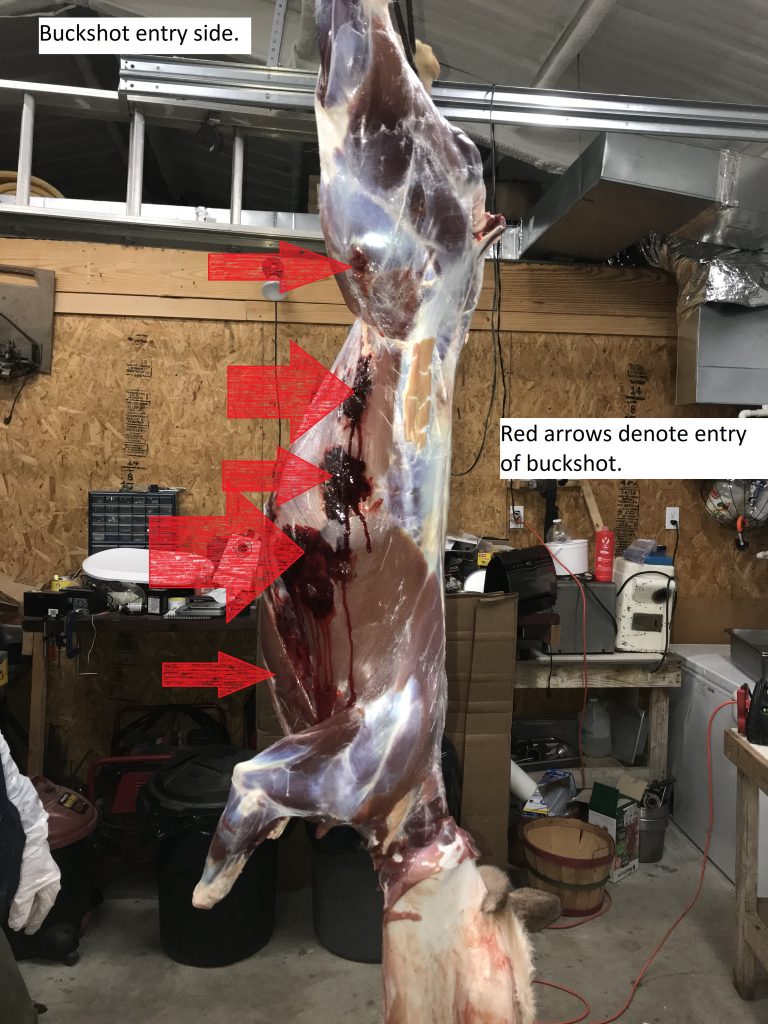 Fig. 1: This is the entry side of the deer after being hit with buckshot from 56 yards. Notice the hinds, shoulders, and backstraps are all intact.
The exit side. The red arrows denote the exit of the nickel-plated #00 buckshot:
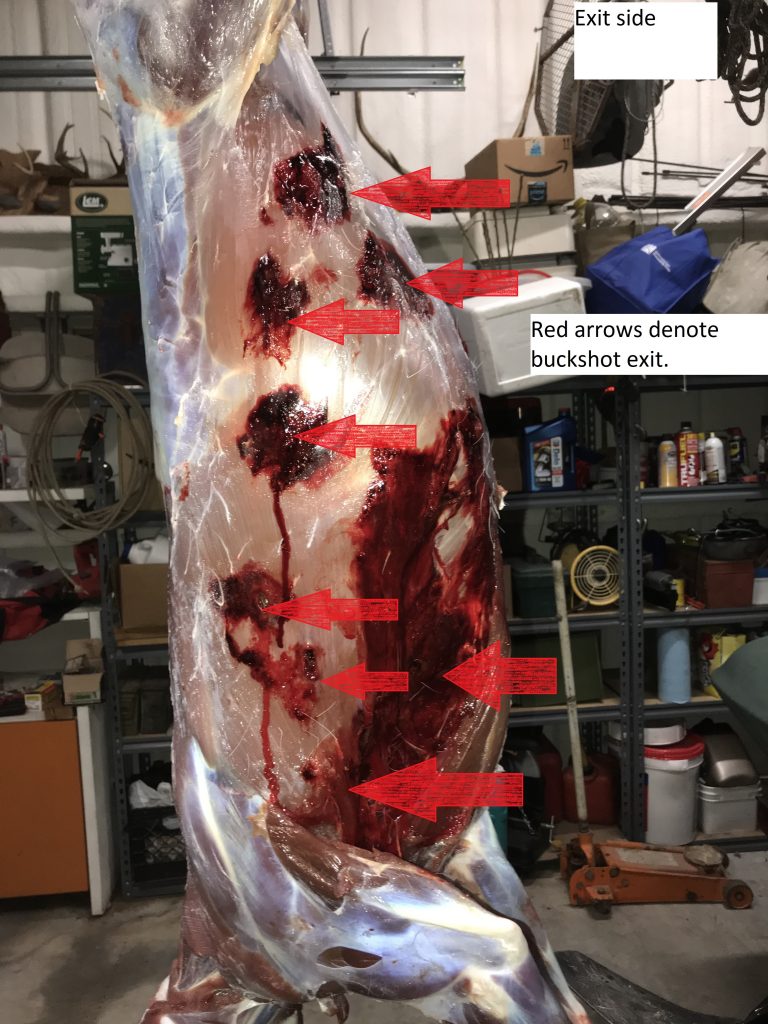 Fig 2: Clear view of the opposite side of the deer.
This is a clear shot of the extensive trauma to the lungs as the buckshot perforated through and through:
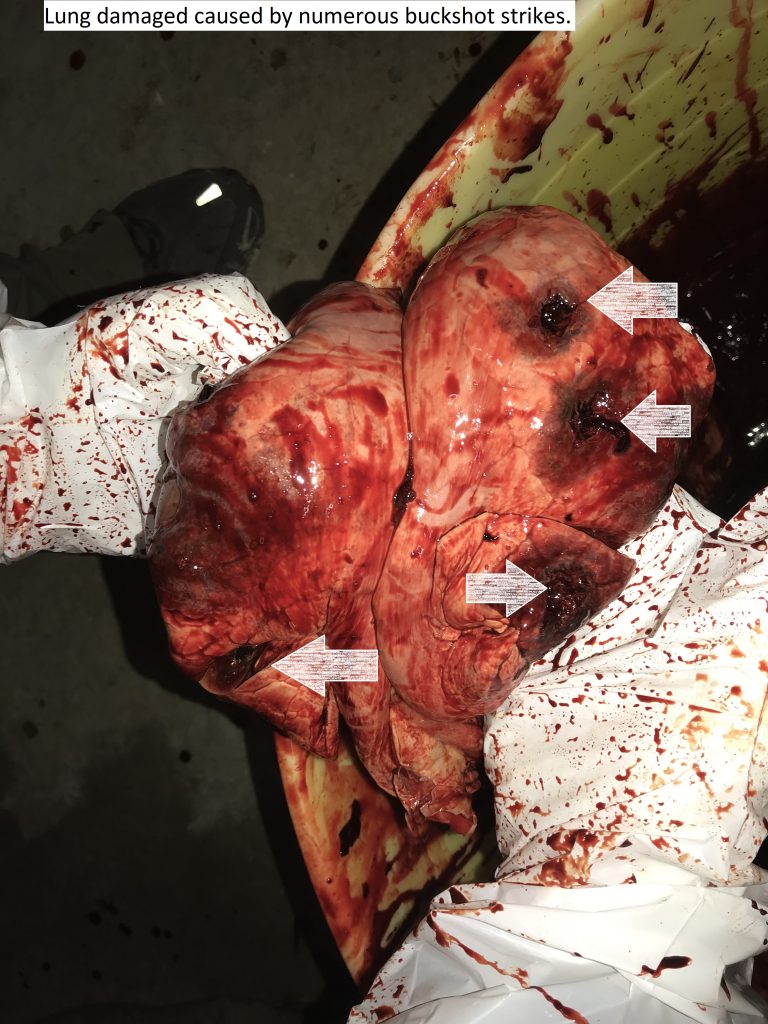 Fig 3: Damage to the lungs was quite extensive.
In this picture, note how the liver was completely destroyed:
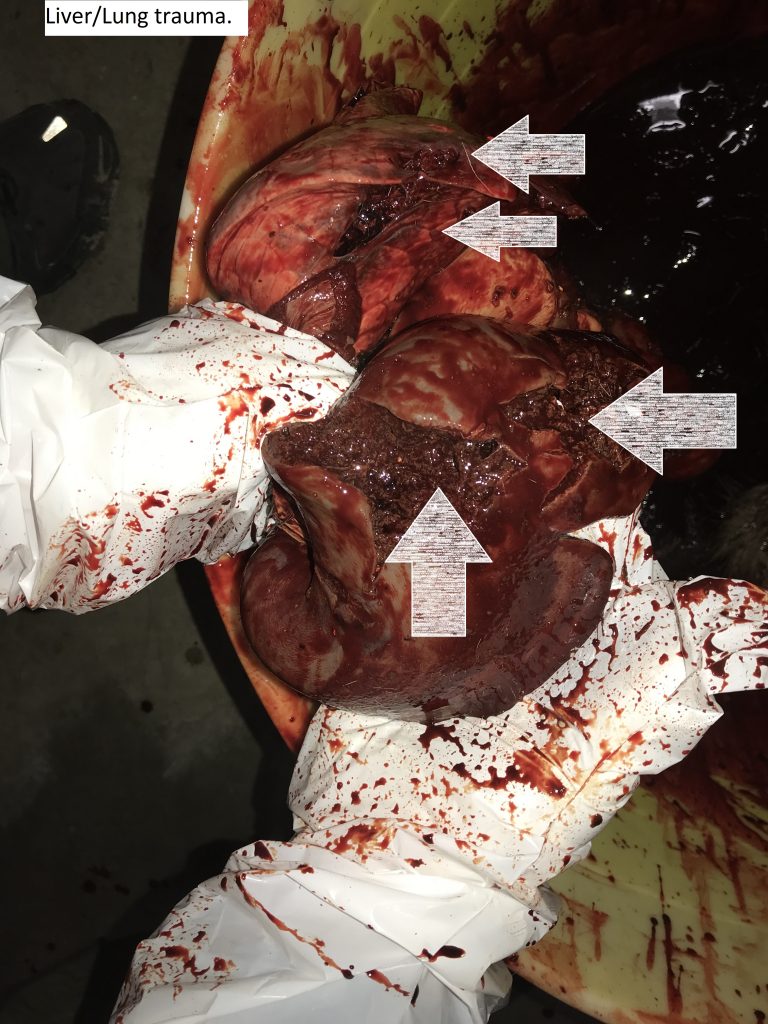 Fig. 4: Massive internal damage to the liver and lungs.
CONCLUSION:
As I look back on the this hunt with my post-mortem examination in mind, I concluded that this particular load was a bit much for Texas-sized deer. I suspect I would have had the same results using one of my 12 or even 9 pellet buckshot loads, but everything is bigger in Texas, right? This is the perfect load for spot and stalking wild boar in thick brush, which I’ll be doing a lot of this year. This load/choke combination will definitely bring home the bacon, no doubt about that.
So if anyone tells you buckshot isn’t very effective for killing deer past 30 yards, send’em my way. After all, bucks put the “buck” in the “shot”.

Leon is a 10 year Marine vet, husband, father, and passionate bow hunter that loves chunking large bricks of lead at game and targets.

Visit Kick’s IND at https://www.kicks-ind.com/ for all your shotgunning needs from busting targets and waterfowl to big game.
Special thanks to Ballistic Products for having one of the largest selection shotgun reloading components in the USA. Give them a shout: https://www.ballisticproducts.com/
As always, we’d love to have you over at Buck and Slug Reloader’s! https://www.facebook.com/groups/213522172431808/
Good friends are worth their weight in gold. Huge thanks to Jason “Marlin” Mears for letting me wake him up at night to use this place to quarter my deer!